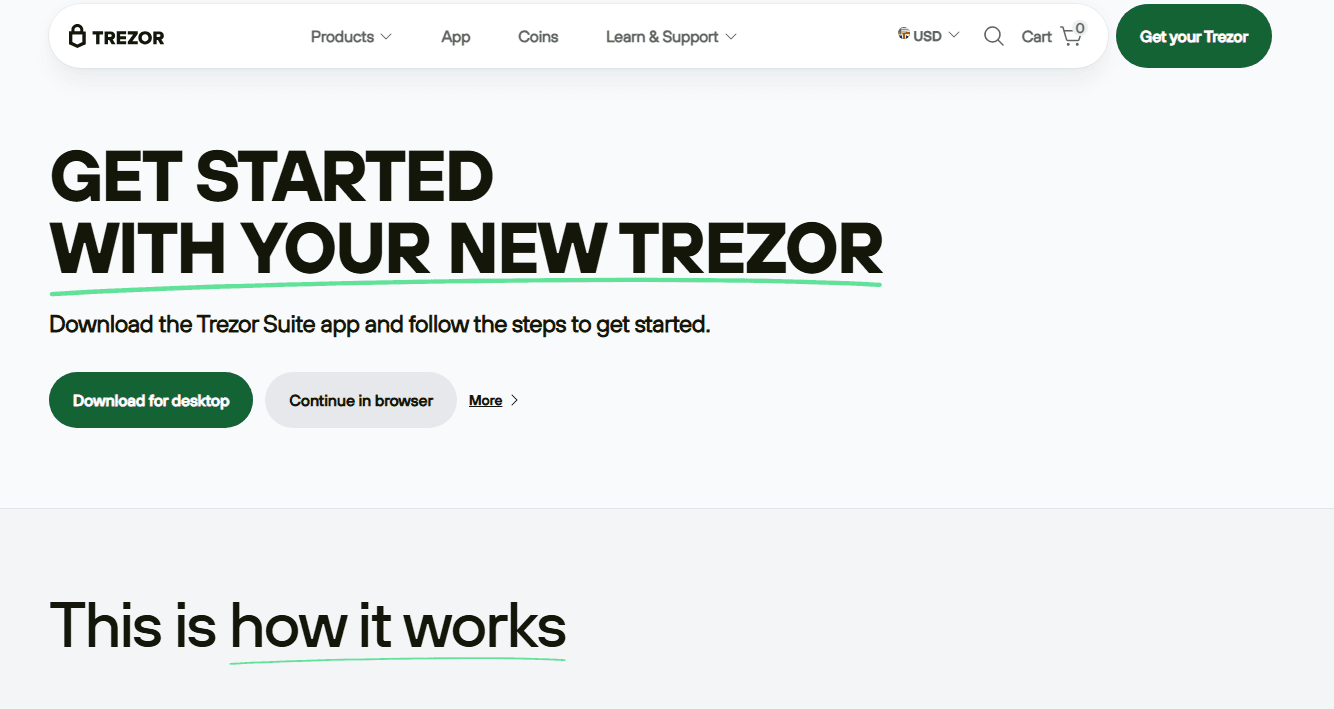
Trezor Login:
If you use a Trezor hardware wallet, you already know it’s one of the safest ways to store your cryptocurrency. But many new users—and even experienced holders—sometimes get confused when it comes to the idea of “Trezor Login.” Unlike regular online platforms, Trezor does not use a username and password. Instead, it uses a hardware-based authentication process that keeps your funds protected from online threats.
This article explains in simple, everyday language how Trezor login works, why it’s different, and how to do it safely each time.
What “Trezor Login” Actually Means
When people talk about “logging in” to Trezor, they usually mean accessing their wallet through Trezor Suite, the official software for managing crypto on a Trezor device.
So in Trezor’s world:
Your device = your login key
Your PIN = your authentication code
Trezor Suite = your dashboard
This means there’s no account stored online, and no password saved on a server. Everything is controlled by the physical device in your hand.
Where to Start Your Trezor Login
To begin, you should only use official Trezor platforms:
Official website: Trezor.io
Official app: Trezor Suite (desktop or browser version)
Avoid using any third-party websites that claim to offer “Trezor login” because they may be fake or designed to steal your recovery seed.
Step-by-Step: How to Log In to Trezor
Here’s the easiest way to understand the login process.
1. Connect Your Trezor Device
Use the USB cable that came with your Trezor. Plug it into your computer. Once it connects, your device will light up or display a welcome screen.
2. Open Trezor Suite
If you haven’t installed it yet, go to the official website and download it. Trezor Suite works on Windows, macOS, and Linux. You can also access it through a supported web browser.
Once you open Trezor Suite, it automatically detects your device.
3. Enter Your PIN
Your device will ask you to enter a PIN. This is a number you created when you set up your device. The PIN entry screen in Trezor Suite uses a randomized grid, meaning the number layout changes each time.
This protects you from keyloggers or screen recorders.
If someone does not physically have your device, they cannot guess the PIN.
4. Confirm Access on the Device
After entering your PIN, you’ll get a prompt on the device. You might need to confirm:
Access to your wallet
Actions such as transactions
Viewing sensitive info
Your device becomes the approval tool. Nothing can happen without pressing its physical buttons.
5. Access Your Dashboard
Once verified, Trezor Suite opens and shows:
Your crypto balances
Transaction history
Portfolio overview
Settings
Options for sending/receiving coins
This is the “logged-in” state—only possible when your device is connected and authenticated.
Why Trezor Login Is More Secure Than Passwords
There are several reasons why Trezor’s login system is safer than typical online accounts:
1. Nothing Is Stored Online
There’s no online database where your “account” can be hacked.
2. Your Private Keys Never Leave the Device
Even during login, the private keys remain inside the hardware wallet.
3. PIN Attempts Are Limited
Incorrect PIN entries trigger time delays, making brute-force attacks nearly impossible.
4. Logging in Requires Physical Possession
A hacker would need your device, your PIN, and your recovery seed—something extremely unlikely.
Common “Trezor Login” Mistakes to Avoid
Many users make errors that can put them at risk. Here’s what to watch out for:
❌ Mistake 1: Searching for “Trezor Login” Online
Fake websites often appear in search results. Always go directly to Trezor.io.
❌ Mistake 2: Entering Your Recovery Seed on a Website
No legitimate login process will ever ask for your 12/18/24-word recovery phrase online.
If a site asks for your seed, it’s a scam.
❌ Mistake 3: Using Public or Shared Computers
These may contain malware that tries to capture screen activity, though Trezor’s PIN protection helps reduce risks.
❌ Mistake 4: Not Updating Trezor Suite
Updates include security improvements and bug fixes. Always keep the software current.
How to Stay Safe Every Time You Log In
Follow these simple security habits:
✔ Use Only the Official App
Always download Trezor Suite from Trezor.io.
✔ Confirm Every Action on the Device
Never approve transactions you don’t recognize.
✔ Keep Your Recovery Seed Offline
Write it on paper. Store it securely. Do not take photos.
✔ Use a Strong PIN
Avoid simple patterns like 1234 or repeating numbers.
✔ Keep Your Device Firmware Updated
New updates protect against emerging threats.
What to Do If Your Trezor Won’t Log In
If you face login issues:
Restart Trezor Suite
Try a different USB cable
Use another USB port
Check for firmware updates
Reboot your computer
If your PIN is forgotten, you’ll need to reset the device and recover your wallet using your seed phrase.
Final Thoughts
“Trezor Login” may seem unfamiliar at first because it doesn’t follow the traditional username-password approach. Instead, it uses a hardware-based authentication system that offers stronger security than any online account can provide.
The key thing to remember is this:
Your device is your login.
Your PIN is your access key.
Your recovery seed is your backup.
By understanding how the Trezor login process works and following basic security guidelines, you can manage your crypto with confidence, knowing your assets are protected by one of the safest systems available.